Greeting from President
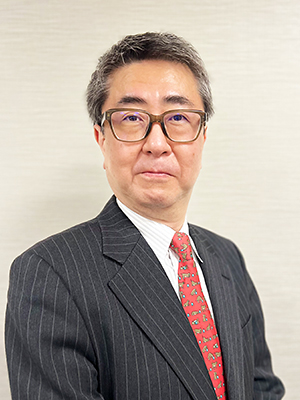
President,
Japanese Society for
Artificial Organs
It is my great honor to have been appointed as the seventeenth President of the Japanese Society for Artificial Organs (JSAO). With a history spanning more than 60 years, the JSAO is a distinguished academic society with a proud tradition. I look forward to working closely with all officers and members to further strengthen and advance our Society. The JSAO is distinguished by its uniquely multidisciplinary membership, comprising physicians, clinical engineers, nurses, scientists, and industry professionals engaged in all aspects of artificial organ science and technology. A defining feature of the Society is its broad academic scope. The JSAO encompasses not only organ-replacement technologies—such as artificial hearts, artificial lungs, artificial livers, and artificial kidneys—but also a broad spectrum of academic fields that exemplify true medical–engineering collaboration, including artificial vision, artificial hearing, artificial nerves, regenerative medicine, medical robotics, and medical artificial intelligence. The Society has also played a crucial role in the international dissemination of Japan’s technologies through the publication of the Journal of Artificial Organs and through active collaboration with international organizations, including the International Federation for Artificial Organs (IFAO), the European Society for Artificial Organs (ESAO), and the American Society for Artificial Internal Organs (ASAIO).
In my term, while upholding the four missions—“Bringing artificial organs from Japan to patients in need,” “Multidisciplinary,” “Human resource development,” and “Internationalization”—articulated by former President Matsumiya, I aim to emphasize two principles that are essential for the sustainable advancement of artificial organ science: maintaining balance and nurturing the next generation.
1. Achieving and Strengthening “Balance”
Artificial organ technology advances only when innovations from basic research are effectively translated into clinical practice and delivered to patients in need. Achieving this requires a well-integrated balance among clinicians, researchers, industry, and regulatory authorities—namely, an open and functional partnership among the medical, academic, and administrative sectors.
The goals of artificial organs have evolved over the decades: from life-saving in the early developmental era, to life-prolongation, to the improvement of activities of daily living and quality of life , and more recently, toward enabling patients’ social participation. Future artificial organs must increasingly support patient-centered care, including home-based treatments. Achieving this requires collaboration not only between medicine and engineering, but also with rehabilitation, nutrition, and medical social work professionals, among others. Multidisciplinary and cross-sector partnerships—maintained in an appropriate and dynamic balance—are essential for meaningful progress. Hence, improving the associate membership categories established by former President Matsumiya will be an important priority.
Japan’s artificial organ technologies remain at the forefront globally. Sustaining and further developing this strength—especially as a leader in the Asia-Pacific region—requires close alignment and cooperation with international societies, including the IFAO, ESAO, and ASAIO. Maintaining Japan’s international position through appropriate “balance” is a responsibility our Society must continue to fulfill.
2. Nurturing the Next Generation
Artificial organ science has evolved through the fusion of medicine and engineering—distinct domains of knowledge that, when combined, generate powerful innovation. The achievements we enjoy today are built upon the unwavering dedication of pioneers who sought to “deliver artificial organs to patients in need.”
However, global needs are changing rapidly, and the pace of technological development continues to accelerate. In such conditions, reliance on traditional approaches may risk the loss of competitiveness. Furthermore, various structural challenges have appeared, including insufficient multidisciplinary collaboration, declining participation among young researchers, limited international visibility, underdeveloped industry–academia–government partnerships, and issues associated with person-dependent (“personalized”) academic operations. Ensuring long-term advancement requires the establishment of a common platform and unified direction that enables multiple generations to develop this field together. We aim to create opportunities for young clinicians, engineers, and industry professionals to systematically learn not only medical science but also regulatory science, ethics, and perspectives on life and death—competencies that are essential for future innovators.
Shinpei Goto, an eminent figure from Iwate Prefecture, famously stated: “Leaving money is inferior; leaving business is moderate; leaving people is the best.” Indeed, the future of artificial organ science depends on the people who will inherit and further develop it. Therefore, nurturing the next generation is one of the highest missions of our Society.
The core philosophy of artificial organ science is clear: “To improve the lives and well-being of patients through artificial organs.” To fulfill this mission, we must identify challenges, engage in thoughtful discussion, develop concrete plans, and implement them steadily. I am fully committed to leading our Society in a manner that unites the strengths of all our members and enables us to advance this vital field together.
I sincerely appreciate your continued guidance and support.